


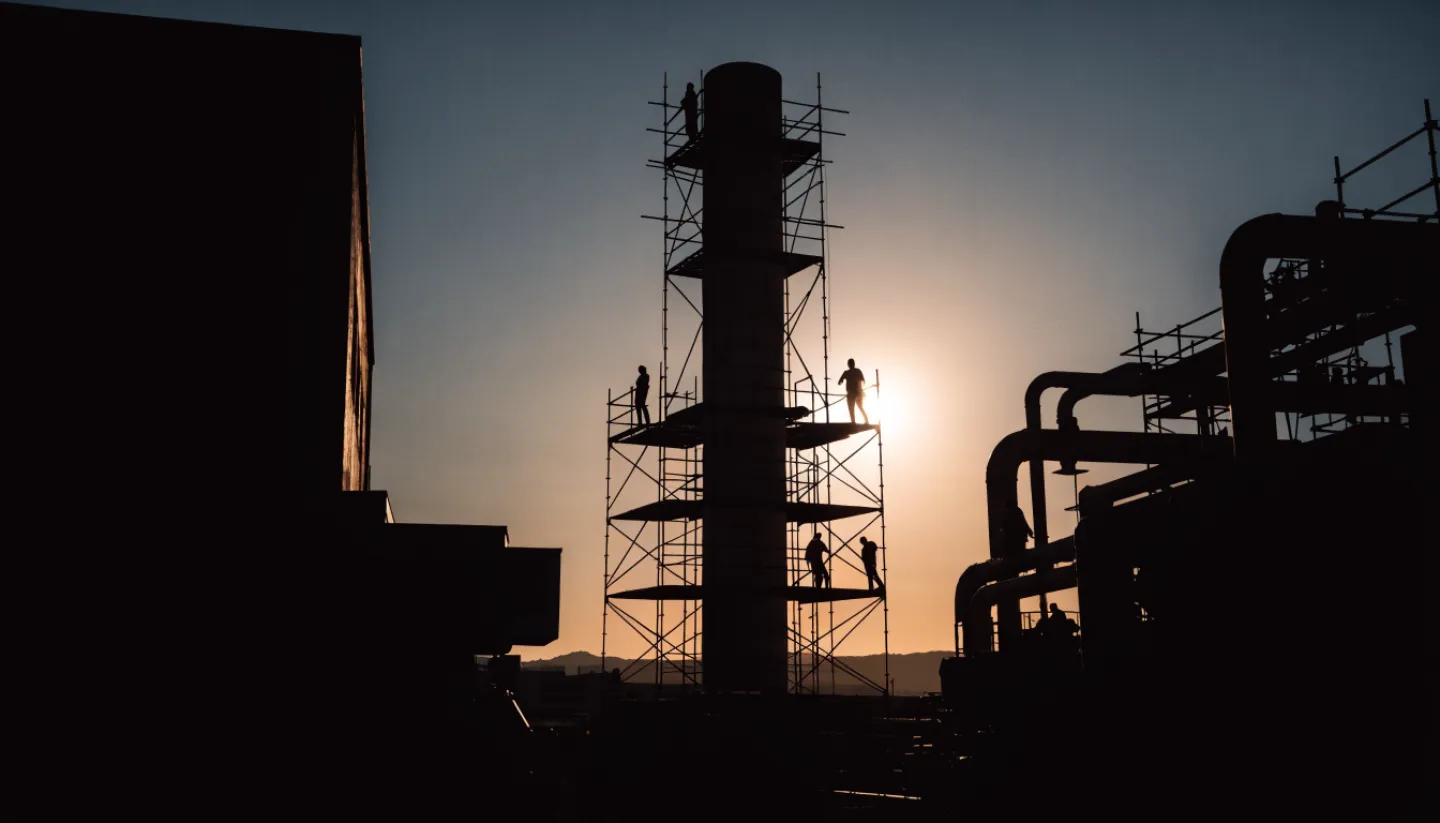
Execution, supervision and commissioning
We put qualified supervisors, technicians and multidiscipline crews on your site — for a single specialist mission or for a full project team, mobilised where the work is.
A site mission is judged on two things
A site mission is judged on two things: whether the work was done to the procedure, and whether it can be proved afterwards. Mobilisation, logistics and badge lists only become your problem when one of those two fails.
So we send qualified people whose certificates have been reviewed before they travel, we work to a method statement agreed in writing before mobilisation, and we hand over a report that stands up in an audit.
What we do on site

Construction & erection
Piping, structural steel, mechanical equipment and static packages — prefabrication follow-up, erection and site assembly under our own supervision.
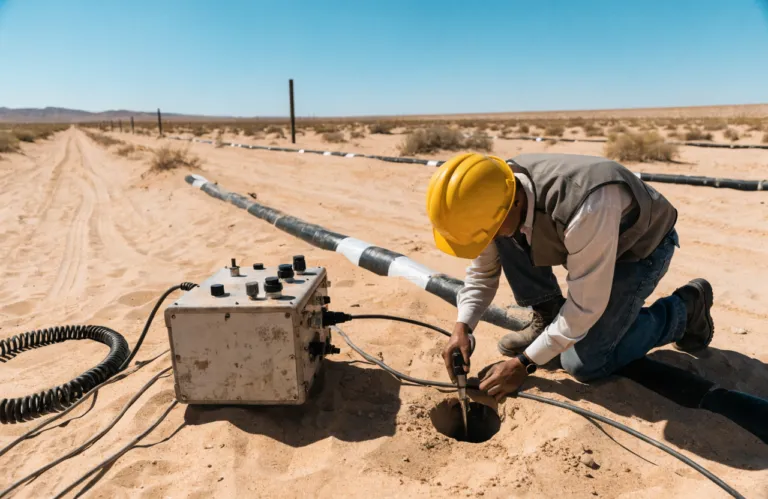
Cathodic protection
Design, installation and commissioning of impressed current and sacrificial anode systems, potential surveys and periodic monitoring campaigns.
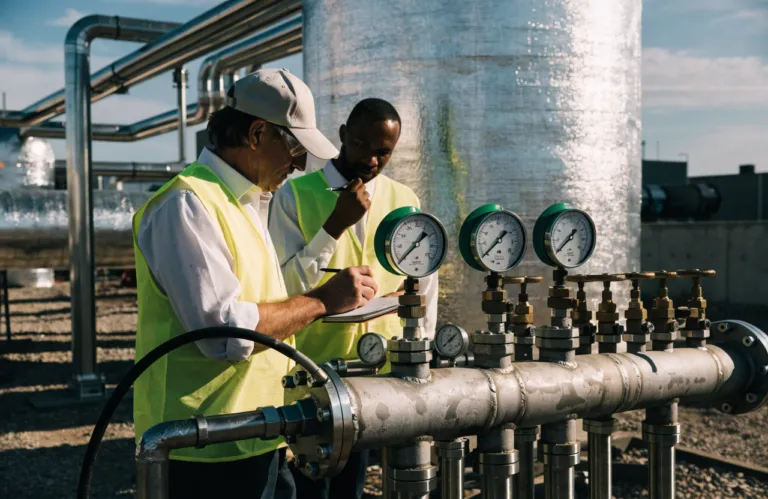
Testing & commissioning
Flushing, hydrostatic and pneumatic testing, reinstatement, loop checks and assistance through pre-commissioning, commissioning and start-up.
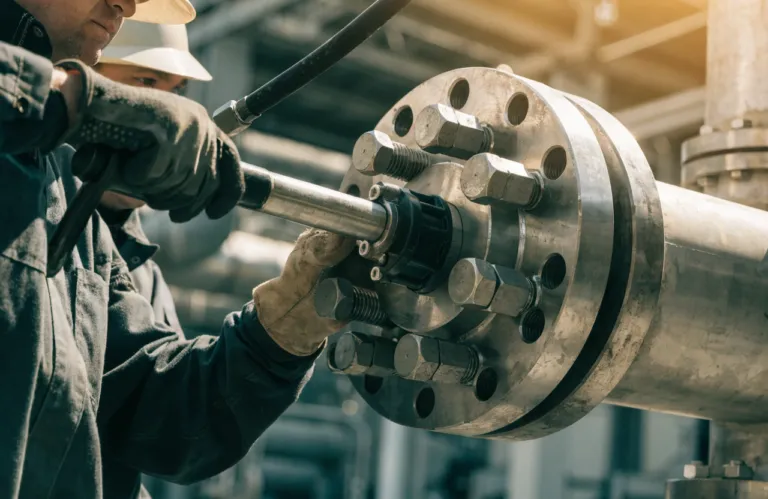
Bolting & torquing
Controlled bolting on critical flanges: hydraulic torquing and tensioning, joint integrity management and full traceability of every joint.

EPC supervision & MOC
Client representation on EPC packages, management of change, punch list follow-up and coordination between engineering, contractors and operations.
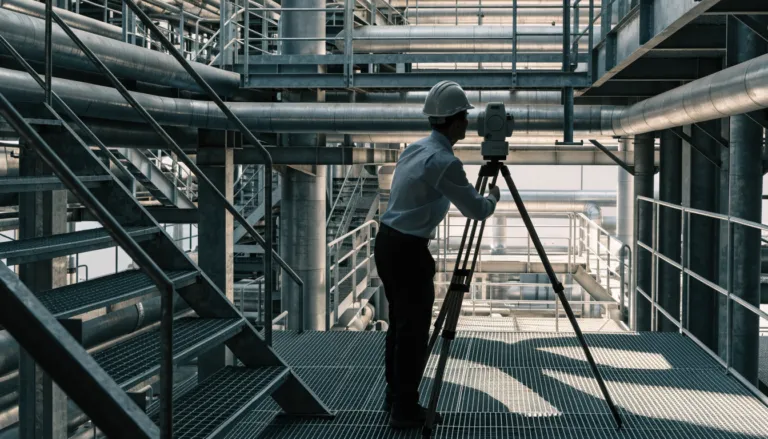
Surveys, scanning & as-built
3D laser scanning of existing installations, dimensional control and as-built documentation to secure tie-ins and revamping works.
Corrosion is our home ground
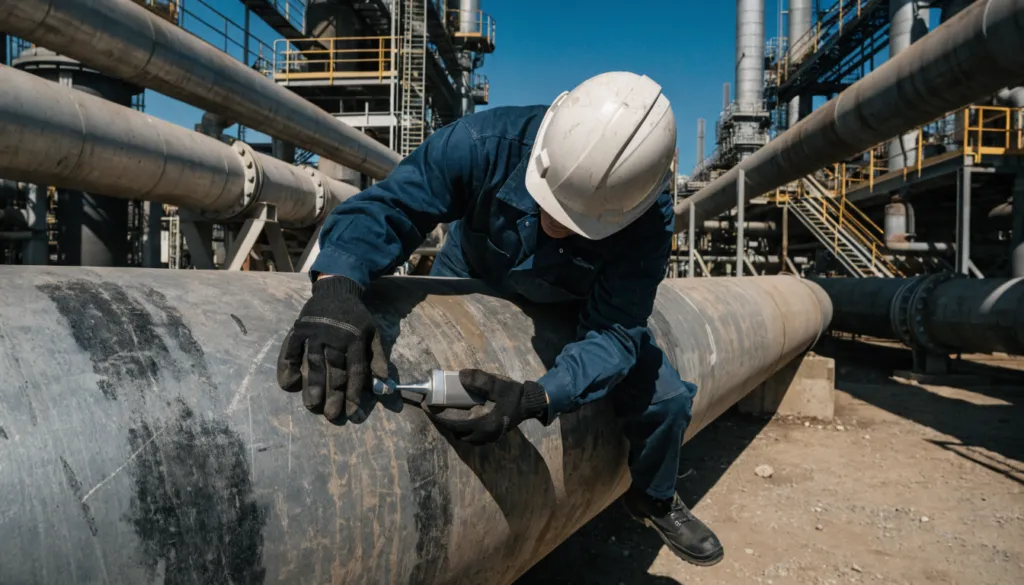
Most of our site interventions come back to one question: how long will this asset last, and what has to be done now to keep it safe. Our teams combine inspection, materials knowledge and protection techniques instead of treating them as separate trades.
- Ultrasonic thickness measurement and corrosion mapping
- Coating and lining inspection, surface preparation control
- Cathodic protection surveys and remedial design
- Remaining life assessment and repair recommendations
How a mission is set up
1. Scope & site visit
We read the specification with you, visit the site when needed and agree on what is really in scope before quoting.
2. Team & qualifications
We propose named profiles with their certificates, medical clearance and site inductions ready for approval.
3. Mobilisation
Visas, travel, accommodation, PPE and tooling handled by us so the team is productive from day one.
4. Reporting & close-out
Daily progress, safety observations, punch items and a documented close-out dossier at the end of the mission.
Where we operate
Selected assignments
Procedures, qualifications and acceptance criteria
Work on a live plant is only accepted if it was done to a recognised standard by people qualified to it. This is the framework our teams work in.
| Activity | Standards and qualifications | What is recorded |
|---|---|---|
| Welding and erection | ASME IX and EN ISO 9606 welder qualification, ASME B31.3 for process piping | WPS and PQR, welder log, weld map, NDT results |
| Bolted joints | ASME PCC-1 for bolted flange assembly | Torque or tension applied, joint register, tooling calibration |
| Cathodic protection | ISO 15589-1 and -2, NACE / AMPP SP0169 for buried and submerged structures | Potential survey, anode current output, rectifier settings |
| Coating and corrosion control | ISO 8501 surface preparation, ISO 12944 protective paint systems | Surface profile, dry film thickness, holiday test, ambient conditions |
| Inspection | API 510 vessels, API 570 piping, API 653 tanks, ISO 9712 for NDT personnel | Inspection report, thickness readings, anomaly list |
| Pressure testing | ASME B31.3 chapter VI and the client hydrotest procedure | Test pack, pressure and temperature chart, signed test certificate |
| Commissioning | System-by-system punch listing against the client procedures | Punch list A, B and C, system handover certificate |
| Classified areas | ATEX / IECEx equipment requirements, permit-to-work regime | Permit records, gas test log, equipment certificates |
What you get at the end of a mission
The report is the deliverable. Everything below is handed over as a file, not described verbally at demobilisation.
- A method statement and risk assessment agreed in writing before mobilisation
- Personnel certificates and qualifications, reviewed before anyone travels
- Daily progress and HSE reporting for the duration of the mission
- Weld map, NDT results and repair record for erection work
- Torque or tension register for every bolted joint in scope
- Potential survey and rectifier data for cathodic protection
- Signed test packs and system handover certificates
- A close-out report with the punch list, the as-left condition and photographs
Frequently asked
How quickly can you mobilise?
It depends on visas, the site induction regime and the qualifications required. We give a realistic date once we have the scope — and we say when a date is not achievable rather than accept it and slip.
Are your people certified?
Welders are qualified to ASME IX or EN ISO 9606, NDT personnel to ISO 9712, and the certificates are sent for your review before mobilisation, not produced at the gate.
Do you work during shutdowns and turnarounds?
Yes, and that is where most of this work happens. Shutdown scopes are planned backwards from the restart date, with the inspection and test points fixed before the unit is opened.
Can you supervise a contractor instead of executing the work?
Yes. EPC supervision and management of change is a scope of its own: we hold the procedure, the inspection points and the reporting, while the contractor executes.
Do you supply equipment as well as people?
Yes. Tooling, torque and tensioning equipment, test equipment and consumables can travel with the team, or be supplied separately through our procurement scope.
Talk to our services team
Send us the scope, the location and the dates. You get a staffing proposal and a price, not a brochure.