



Four ways to work with CONVERGENCE
Engineering, procurement, field services and consulting. Most clients start with one of them and end up using two or three — because it is the same team, the same standards and one single point of contact.

Engineering
Feasibility and FEED, detail design, piping and materials, stress and integrity calculations, as-built and revamping studies.
Procurement
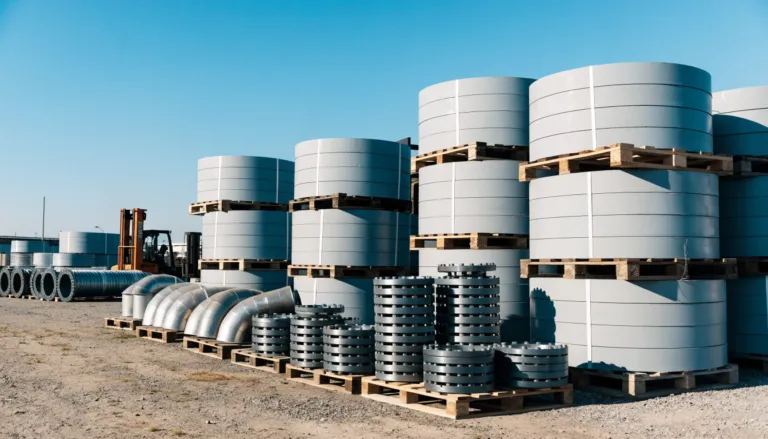
Sourcing of valves, pumps, gaskets, fasteners, hoses and conveyor equipment, exclusive representations, expediting and logistics.

Field services
Construction and erection, cathodic protection, testing and commissioning, controlled bolting, inspection and corrosion control.

Consulting
Technical assistance, recruitment of qualified profiles, owner’s engineer missions, training and independent audits.
Corrosion, materials and integrity
It is the thread that runs through everything we do. Whether we design a line, source a gasket or send a supervisor on site, the question behind the work is the same: will this hold, for how long, and under which conditions.
That is why our engineering, procurement and site teams sit together rather than in separate silos — a material choice made in the design office is checked by the people who will install and inspect it.

One team, four contracts
Clients arrive with one of four situations: a study to launch, a part to find, a crew to put on site, or an engineer to place for a year. Four different contracts, four different risk profiles, four different ways of being invoiced — and the same team behind all of them.
That matters when a scope moves. A supply that turns out to need a stress check, or a site mission that uncovers an as-built problem, does not send you back to a new supplier and a new qualification round.
How we engage
Lump sum study
A defined deliverable, a fixed price and a delivery date — for feasibility, design or audit work.
Supply contract
Sourcing, inspection and delivery of equipment and spares, with expediting and documentation included.
Site mission
A crew or a specialist mobilised on your site for a campaign, a shutdown or a full project phase.
Long-term secondment
Engineers integrated in your organisation for months or years, under our contract and our follow-up.
Where we operate
Which route fits your need
Picking the wrong contract type is what makes a simple job expensive. Here is how the four engagements compare.
| If you need | The route | What you sign | Typical duration |
|---|---|---|---|
| A technical answer before committing capital | Lump sum study | Fixed scope, fixed price and a fixed list of deliverables | 2 to 12 weeks |
| A part, a package or a full shutdown supply | Supply contract | A purchase order against a written offer stating lead time and certification | Days to several months |
| Work executed on your plant | Site mission | Method statement, personnel qualifications and reporting agreed before mobilisation | One week to a full turnaround |
| A qualified person working under your instruction | Secondment | Framework agreement plus assignment order, with monthly timesheets | 3 months to several years |
| Someone to hold the project on your behalf | Owner’s engineer / PMC | A scope of representation with the reporting line and the delegation limits | Duration of the project |
Frequently asked
Can one contract cover several of these routes?
Yes. A framework agreement sets the commercial terms once, then each study, supply or mission is called off against it. It removes the qualification round every time the scope moves.
Do you work as a subcontractor to an EPC contractor?
Yes, on both sides: as a subcontractor within an EPC scope, and as the owner’s representative checking what an EPC delivers. What we do not do is hold both roles on the same project.
What is the smallest job you take?
A single gasket, or one inspector for one week. Small scopes are how most client relationships here started, and they are handled with the same documentation as a full package.
How is confidentiality handled?
Drawings, data sheets and plant data are covered by a confidentiality agreement before anything is shared, and client names are only published on this site with permission. It is also why several of our references appear here as an operator, not by name.
Not sure which one you need?
Describe the problem. We will tell you honestly whether it is a study, a supply, a site mission — or none of the three.